In-app onboarding
System · Company · 2024
Increased activation by replacing a static onboarding entry point with usage-triggered guidance tied to real user progress.
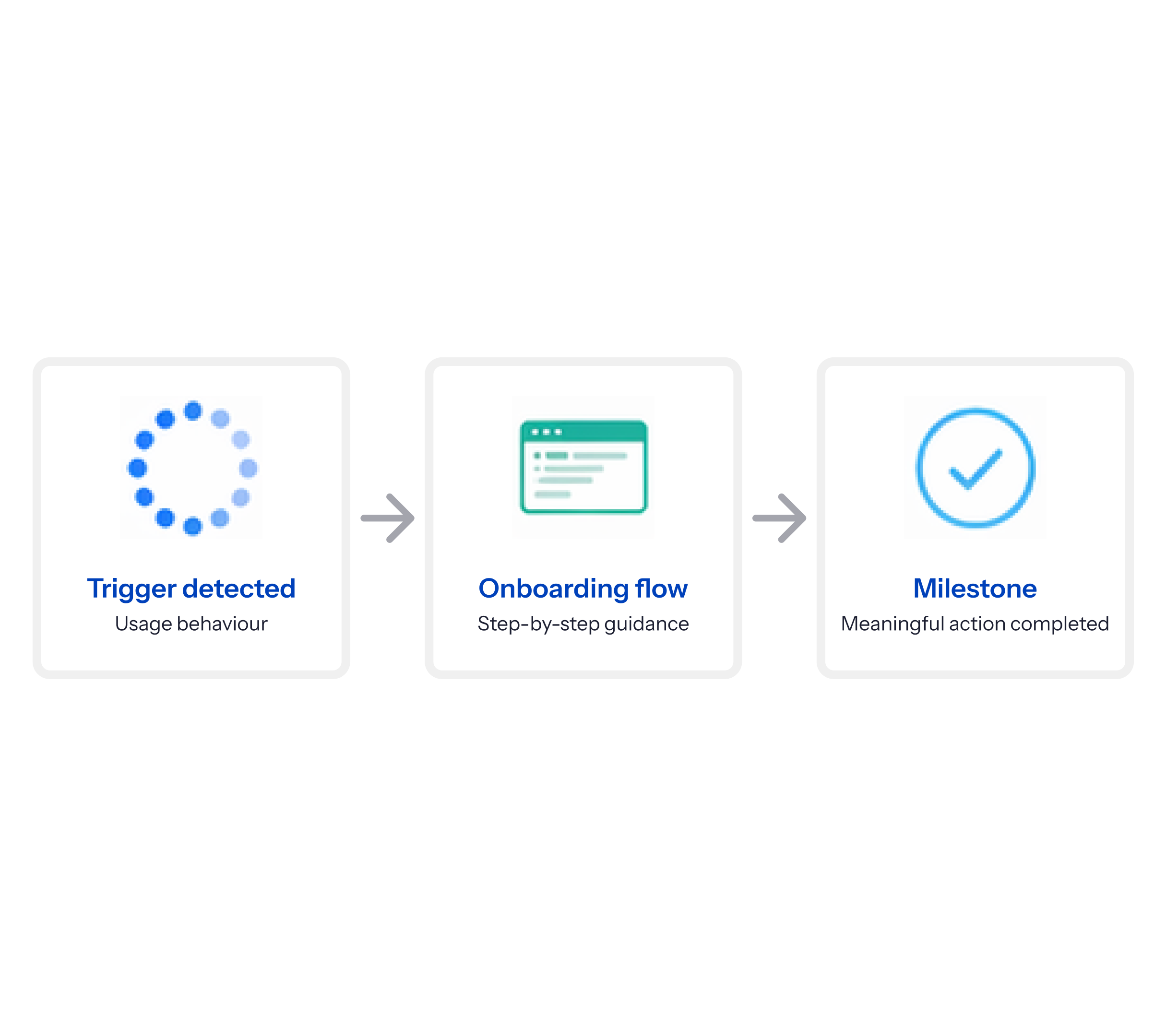
Built a reusable onboarding system based on usage triggers and milestone-driven flows, improving activation without relying on email, external training, or heavy UI additions.
> Key decisions
01/ Replace the monolithic tour with contextual interventions
Different users needed different prompts at different moments, not the same scripted introduction.
Impact
Shifted onboarding from passive explanation to milestone support tied to behaviour.
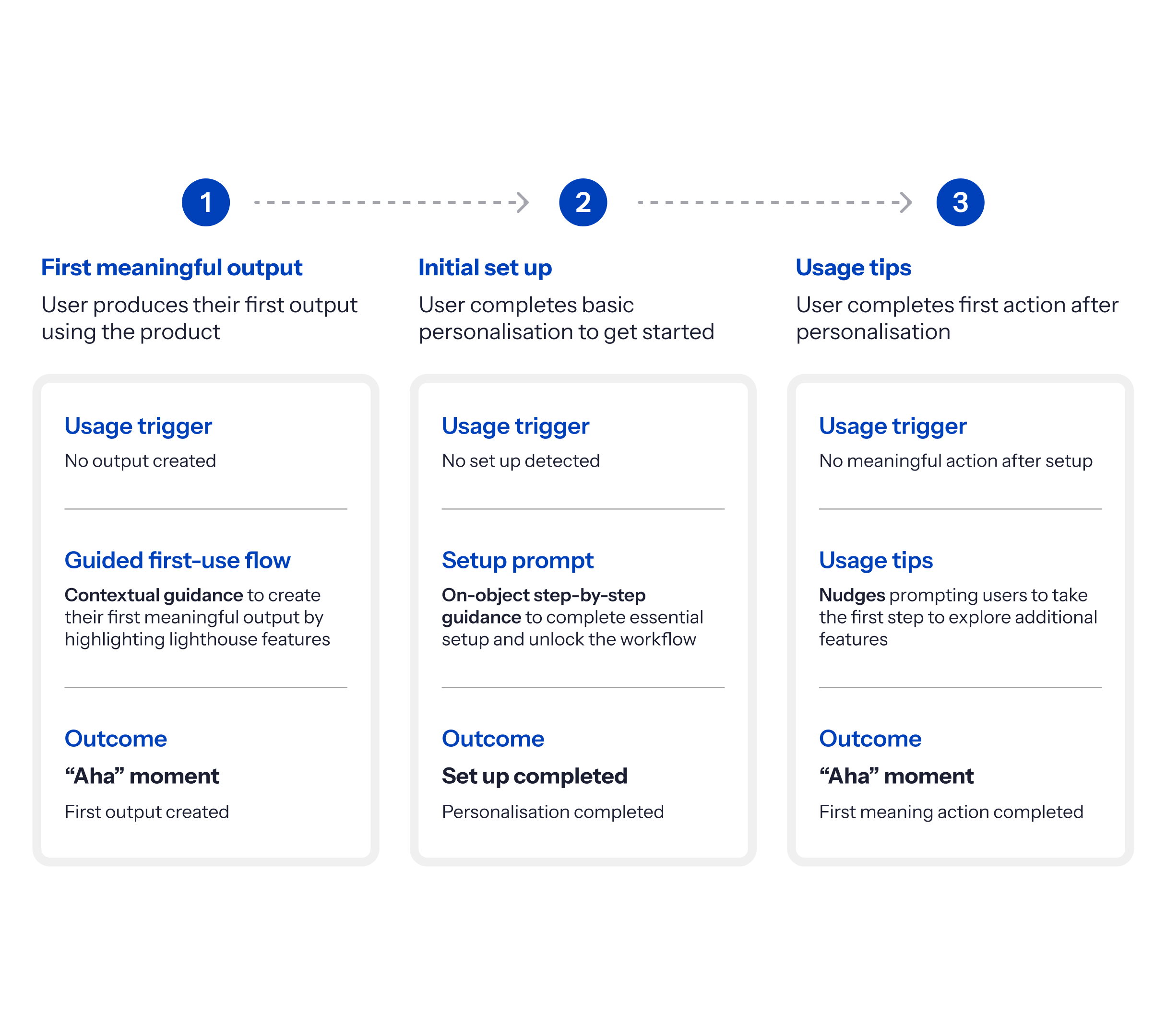
02/ Define onboarding around user intent milestones
Setup, invite, first output, and return behaviour were better anchors for guidance than screen-by-screen education.
Impact
Made the system easier to measure and more relevant to real adoption progress.
03/ Build lightweight guidance patterns instead of bespoke UI for each experiment
Growth and UX learning needed a reusable interaction system, not one-off flows that created interface debt.
Impact
Created a cleaner base for future activation experiments.
04/ Write the measurement plan before launch
PM, design, and engineering needed one shared definition of success to avoid post-hoc storytelling.
Impact
Made experiment evaluation faster and reduced ambiguity around what was working.
> Trade-offs
01/ Adaptivity vs implementation simplicity
A more adaptive system added some implementation complexity, but it created a better foundation than a static checklist.
02/ Personalisation depth vs immediate time-to-value
Opted for rule-based triggers in Phase 1 because they were easier to QA and rather than personalisation which would require user profile data.
03/ Mandatory vs optional onboarding
Onboarding was optional and could be skipped to avoid disrupting user workflows. Instead of forcing completion, users could revisit onboarding flows later via a dedicated menu, ensuring access without interruption.
> Situation
- Product
- > Enterprise software with complex feature surface and indirect end-user access
- Users
- > New users entering via top-down adoption with uneven training and unclear path to first value
- Constraints
-
- > Very limitied access to users (i.e. emails) beyond the interface itself
- > High variance in workflows and use cases amongst users
- > Need for measurable, in-product activation improvements
> Problem
The existing onboarding model explained the interface, but it did not help users complete the work that mattered. It created orientation without improving activation.
> Execution
- > Reframed onboarding around milestone moments instead of generic orientation.
- > Added short trigger-based guidance patterns that could be reused across experiments.
- > Instrumented the core setup and first-output path before rollout.
> Results
- > Activation improved without turning onboarding into a heavyweight experience.
- > The team gained a reusable framework for future growth and habit-formation experiments.
- > Guidance became easier to tune because it was tied to behaviour rather than a fixed script.