TimberBase trading platform
Two-sided B2B Marketplace · Company · 2020-2023
Validated that transaction infrastructure is the bottleneck in digitising timber trade, shifting strategy from marketplace to execution-layer tooling.
Contributed to platform maturity leading to acquisition by UFP Industries, Inc. in 2023.
> Key decisions
01/ Validate through real transactions, not simulated flows
Simulations cannot capture real constraints such as document handling, pricing negotiation, and freight dependencies.
Impact
- > Exposed execution bottlenecks early rather than discovery bottlenecks
- > Revealed that listings alone do not drive transactions
02/ Deprioritise marketplace liquidity in favour of transaction execution
Liquidity is irrelevant if transactions fail at pricing, documentation, or logistics stages.
Impact
- > Reframed product scope from marketplace to transaction infrastructure
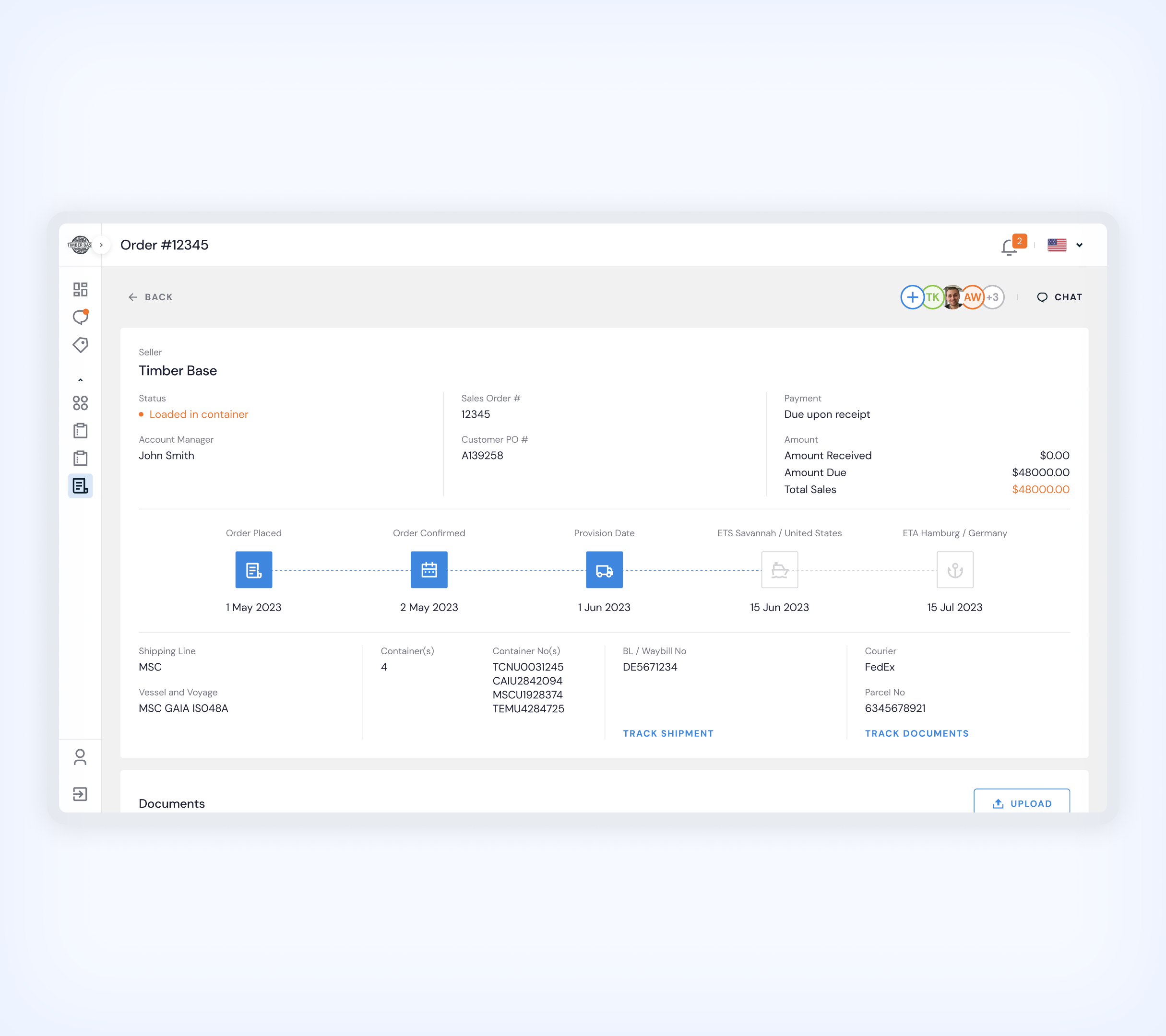
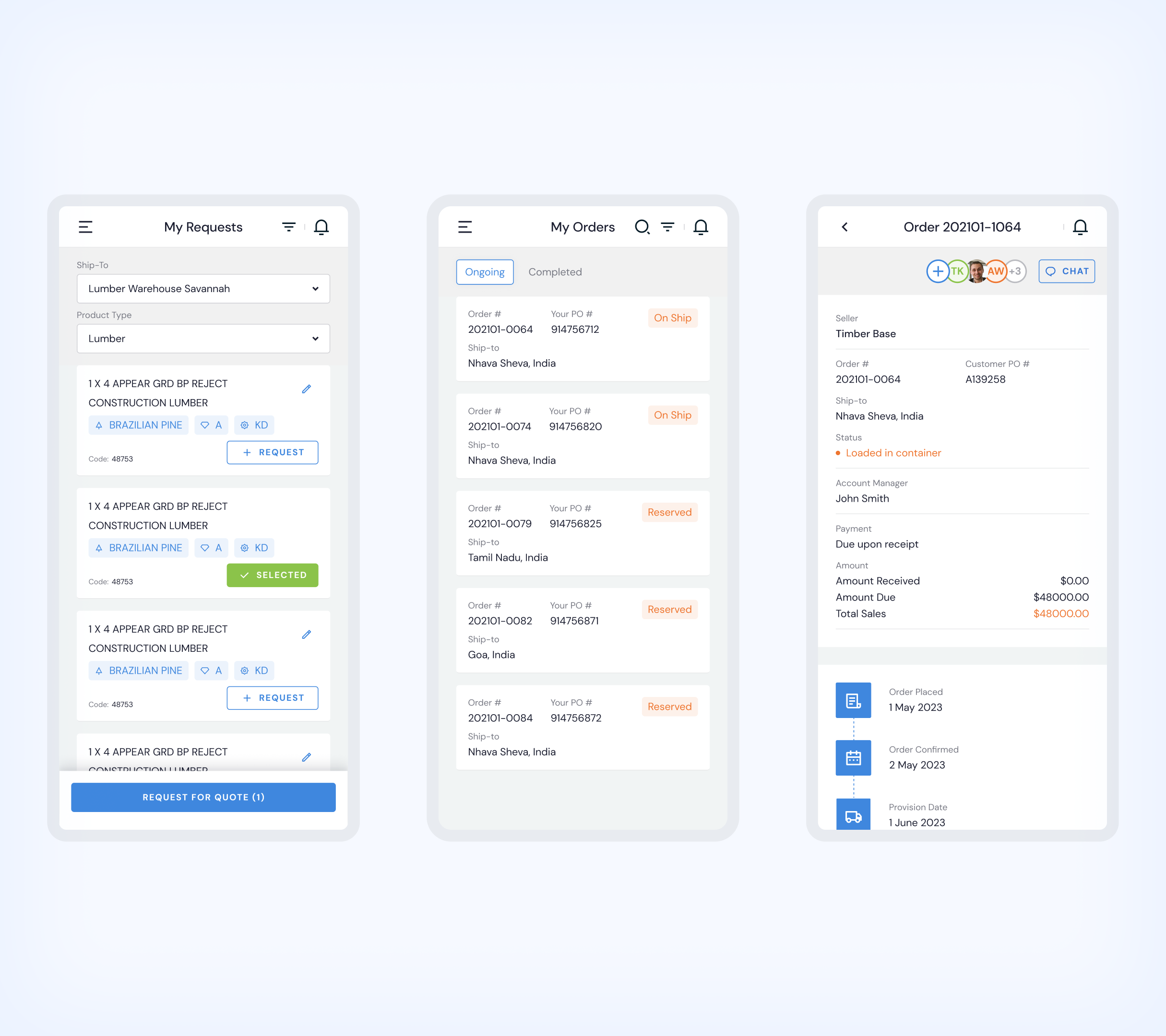
- > Redirected roadmap toward order management, documentation, and coordination
03/ Use Wizard-of-Oz operations to simulate product completeness
Full automation required assumptions that were still unproven.
Impact
- > Reduced build cost while testing real behaviour
- > Allowed rapid iteration on deal structures and workflows
04/ Focus on cross-border trade as wedge use case
Domestic trade already functioned, while cross-border trade carried the highest friction and unmet demand.
Impact
- > Created clearer differentiation against existing processes
- > Concentrated learning on the highest-value problems around logistics, documentation, and trust gaps
> Trade-offs
- > Did not build a scalable marketplace early
- > Sacrificed growth optics to understand execution reality
- > Accepted high operational overhead
- > Slower scaling, but higher learning fidelity
- > Avoided standardising the product too early
- > Increased product complexity, but preserved real-world variability
- > Did not eliminate intermediaries fully
- > Preserved trust where the platform could not yet replace it
> Situation
- Product
- > Early-stage attempt to digitise international timber trade
- Users
- > Buyers, suppliers, and operators coordinating cross-border timber deals
- Constraints
-
- > Relationship-driven deals
- > Fragmented workflows across email, calls, and spreadsheets
- > Low standardisation across pricing, grading, and logistics
- > No existing product baseline, so behaviour had to be learned from real transactions
> Problem
A naive marketplace model assumes that listing supply and matching demand creates liquidity.
In timber trade, this breaks because:
- > pricing is highly contextual across region, grade, and logistics
- > trust is embedded in relationships, not interfaces
- > transactions depend on documentation, freight, and coordination
Core tension: Can a digital platform replace relationship-driven trade without collapsing under operational complexity?
> Execution
- > Built a two-sided marketplace with supply listings and demand requests
- > Layered manual operations to facilitate real transactions
- > Iterated on pricing workflows, documentation handling, and logistics coordination
> Results
- > Transactions, not listings, became the product focus
- > Core friction was identified in documentation requirements, pricing variability, and logistics coordination
- > Discovery alone was shown to be insufficient without execution infrastructure
- > Product scope expanded from listings to transaction systems
- > Roadmap priorities shifted toward operational infrastructure over growth features
- > Success criteria moved from users onboarded to deals successfully completed
- > Product and operational maturity contributed to acquisition by UFP Industries, Inc.