waiwaihello
Directory · Personal · 2023
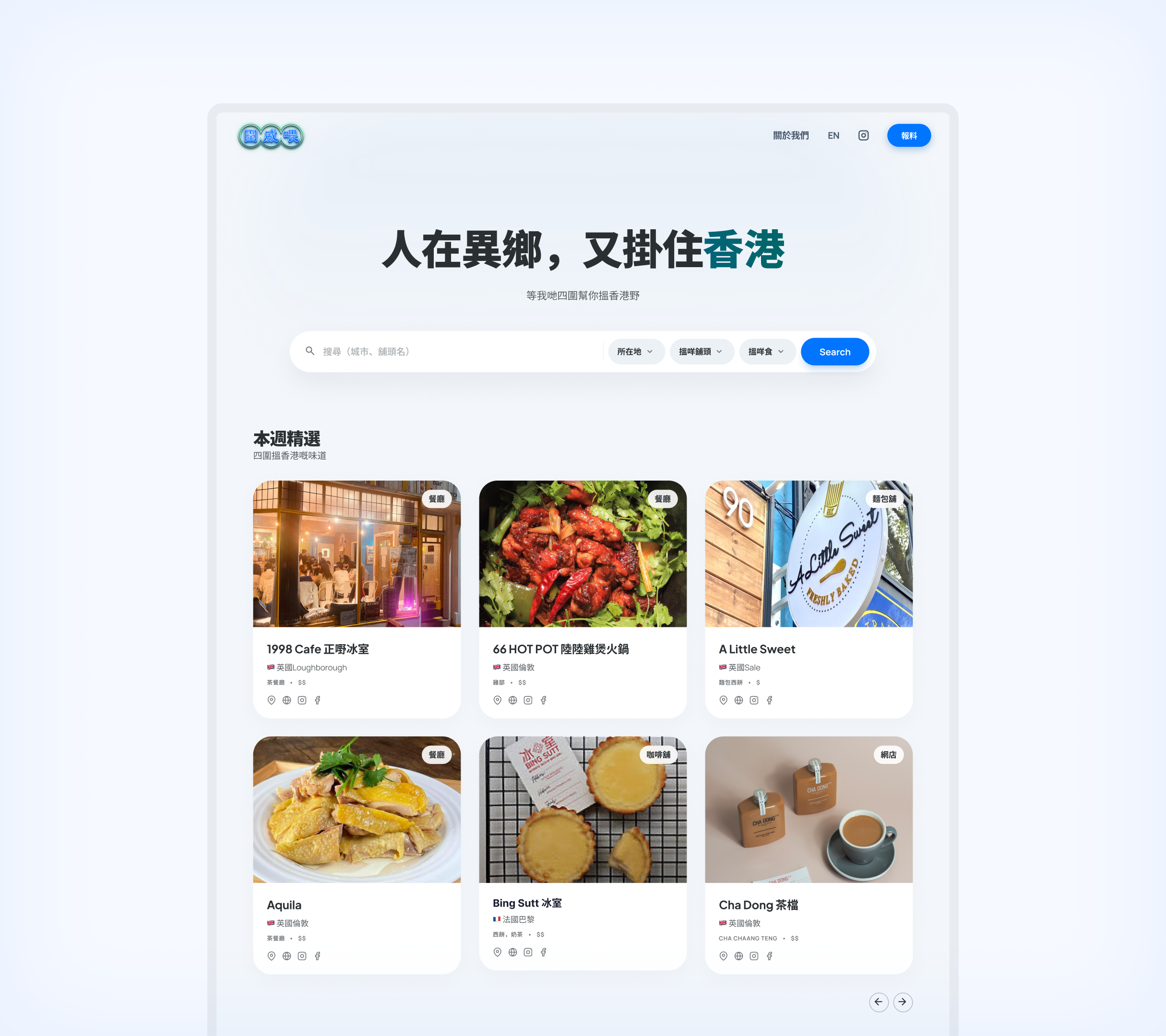
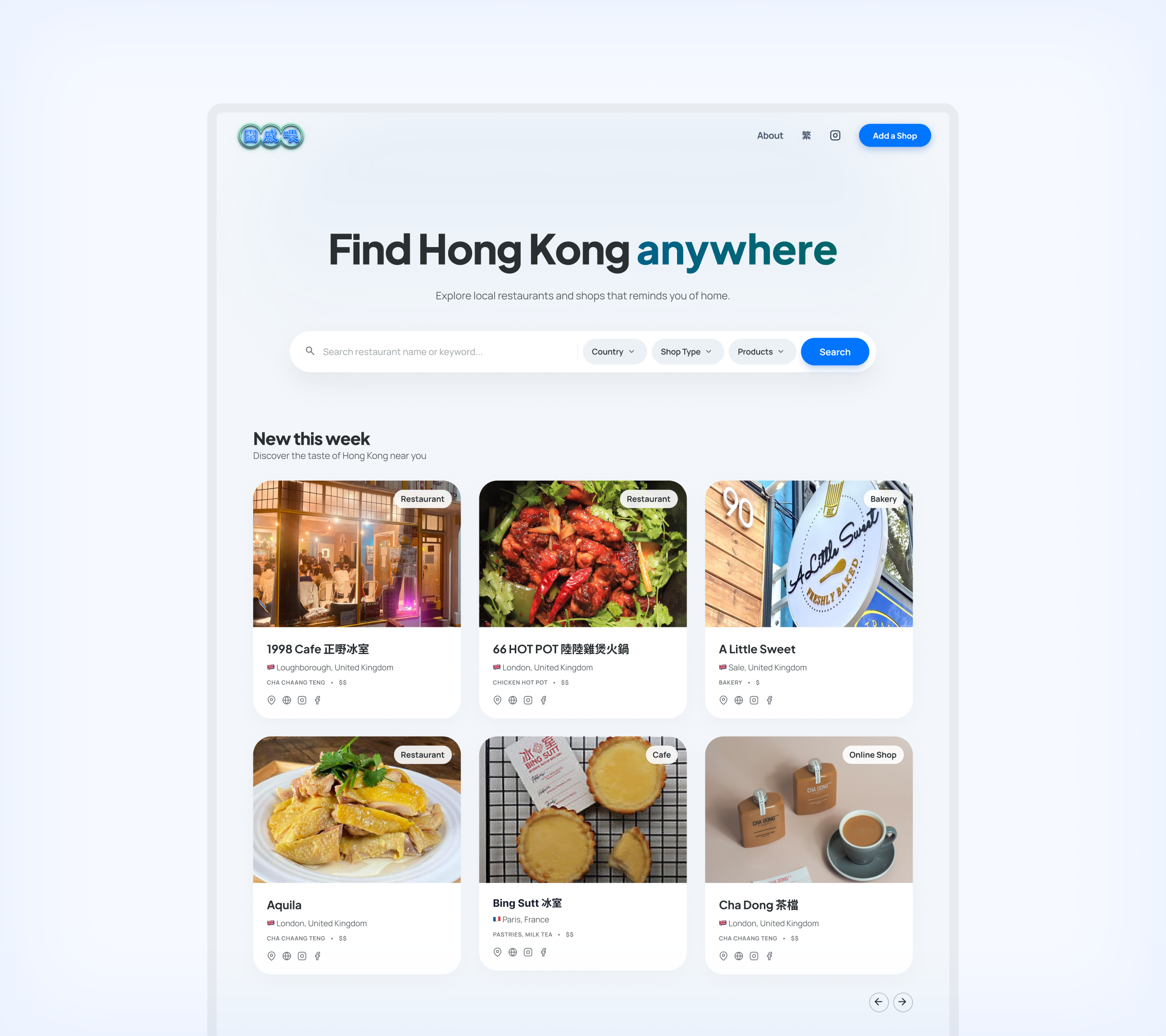
Tested whether a tightly scoped, curated directory could deliver user value without adding social or platform complexity.
Defined and launched a focused discovery product for Hong Kong communities abroad, showing that clear scope and curated content can create immediate usefulness before introducing heavier platform features.
> Key decisions
01/ Anchor the product on food businesses as the primary entry point
For Hongkongers moving abroad, food is the first and most immediate need for familiarity and orientation. Starting here created a clear, behaviour-driven use case instead of a generic community directory.
Impact
Established a strong initial pull and made the product instantly understandable as a discovery tool.
02/ Position it as a discovery channel, not a social platform
The goal was to help users find relevant places quickly, not to replicate social interactions or community features which add complexity without proving core value.
Impact
Kept the experience focused, reduced unnecessary features, and validated the usefulness of curated discovery on its own.
03/ Build a curated dataset manually
There were no reliable APIs or existing datasets that allowed filtering specifically for Hong Kong-oriented businesses, making automated aggregation ineffective.
Impact
Ensured relevance and quality of listings, reinforcing trust despite the small scope.
04/ Use a low-code delivery approach
The leverage was in defining the right scope, structuring content, and shaping the discovery experience rather than building custom infrastructure.
Impact
Accelerated time to launch and allowed focus on building up the database.
05/ Treat curation as the core product
Value came from selecting and organising the relevant, authentic businesses, not from volume or feature depth.
Impact
Made the directory feel intentional and useful, even without scale or platform features.
> Trade-offs
01/ Narrow audience vs broader appeal
Limiting the audience reduced generality, but it made the value proposition much sharper.
02/ Lightweight directory vs richer community layer
Social features could have driven engagement, but they would have made the product heavier and harder to validate early.
03/ Low-code speed vs extensibility
Low-code delivery accelerated validation, but it imposed constraints on long-term interaction design and platform flexibility.
> Situation
- Product
- > Community-focused local discovery directory
- Users
- > Hong Kongers overseas trying to find relevant restaurants and businesses through scattered community knowledge
- Constraints
-
Sparse structured data, trust sensitivity, and the need to validate value before adding contribution or moderation systems
> Problem
Discovery information existed but was scattered across social platforms and word of mouth, making it inconsistent and hard to trust. Mainstream platforms did not support niche filters such as Hong Kong or Cantonese communities. The challenge was to consolidate this into a clear, trustworthy browsing experience without overbuilding into a full platform.
> Execution
- > Defined a tighter information architecture around high-signal local business discovery.
- > Used low-code tooling to move quickly on framing, layout, and curated content structure.
- > Focused product effort on clarity, browseability, and usefulness rather than feature expansion.
> Results
- > The project demonstrated that a tightly scoped directory could feel valuable without a complex social layer.
- > It created a shipped artefact that tested both product positioning and UX judgement.
- > The work clarified how much value curation could create before platform complexity became necessary.